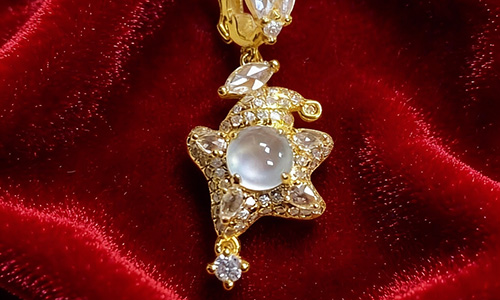
Dushan jade — also called Nanyang jade or Dushan Yu — is a colorful Chinese gemstone that often passes for jadeite in display cases. Its green patches, polished surfaces, and carved forms all mimic jadeite at first glance. But the jade vs dushan jade difference is significant: Dushan jade is a multi-mineral silicate rock, not a pyroxene, and five clear signs — color distribution, internal structure, hardness, light transmission, and origin — set them apart for good.
Jade vs Dushan Jade Difference: 5 Clear Signs for Smart Buyers
Jadeite is a single-mineral pyroxene with a tightly interlocking fibrous structure, while Dushan jade is a composite of plagioclase feldspar, zoisite, and other silicates. This mineralogical gap shows up in every test below. The Gemological Institute of America classifies Dushan jade as a distinct rock type, and the five signs outlined here match the field identification methods gemologists use.
5 Clear Signs That Separate These Two Stones
1. Color Distribution — Count the Hues
The most obvious difference is color. Dushan jade typically shows three or more colors in a single piece — green, white, yellow, purple, and black all mingled together. Jadeite, by contrast, usually displays one dominant hue with subtle tonal variation. If a stone looks like a painter’s palette, it is almost certainly Dushan jade.
2. Internal Structure — Look Through a Loupe
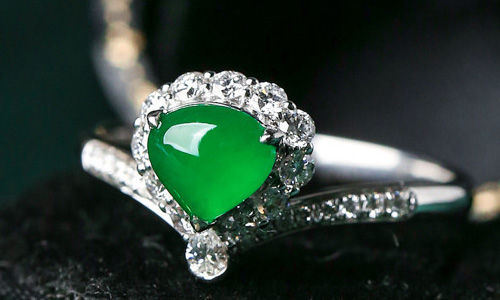
Under a 10× jeweler’s loupe, Dushan jade reveals a granular, brecciated texture — individual mineral grains are visible, and the stone looks pieced together. Jadeite’s fibrous interlocking structure appears smooth and homogenous by comparison. You can browse our jadeite ring collection for examples of the clean, even texture that genuine jadeite displays under magnification.
3. Hardness — Try the Steel Test
Jadeite ranks 6.5–7 on the Mohs scale, while Dushan jade sits at 5.5–6.5. A steel knife will not scratch jadeite but can leave a faint mark on Dushan jade. Test an inconspicuous area gently — this hardness gap is one of the easiest ways to confirm you are looking at jadeite.
4. Light Transmission — Hold It Up
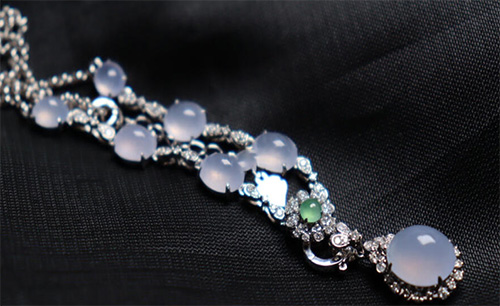
Hold each stone against a bright light. Jadeite typically transmits light evenly, with consistent translucency across the piece. Dushan jade’s mixed mineral composition creates uneven light transmission — some areas glow while others stay opaque. This patchy effect is a reliable visual cue. Our jadeite pendant selection shows the kind of even translucency you should expect from authentic jadeite.
5. Origin and Price — Follow the Source
Dushan jade comes from a single mine complex in Nanyang, Henan Province, and is produced in large quantities, keeping prices low. Jadeite deposits are scattered across Myanmar, Guatemala, and Japan, with the finest material from Myanmar commanding premium prices. The price gap alone often reveals the jade vs dushan jade difference: if a “jadeite” bangle seems unusually cheap, it may be Dushan jade.
Why the Confusion Persists
Carvers love Dushan jade for its vivid multi-color patterns, and some sellers exploit that visual appeal by labeling pieces simply as “jade.” The term is not technically wrong in Chinese trade practice — Dushan jade is one of China’s “Four Famous Jades” — but it is misleading for international buyers who expect jadeite. Always request a gemological certificate and verify the stone’s mineral composition before committing to a purchase.
Frequently Asked Questions
Is Dushan jade a type of jade?
Dushan jade is not true jade in the mineralogical sense. It is a multi-mineral silicate rock, while true jade is either jadeite (pyroxene) or nephrite (amphibole). Dushan jade is one of China’s traditional “Four Famous Jades” by cultural convention, not by scientific classification.
How can I tell Dushan jade from jadeite quickly?
The fastest clue is multi-color: if a single piece shows three or more distinct colors, it is likely Dushan jade. Jadeite rarely displays more than one dominant hue per stone.
Is Dushan jade valuable?
Dushan jade is valued for its artistic carvings and unique color patterns, but it is significantly less expensive than high-quality jadeite. Understanding this difference helps you make informed purchasing decisions and avoid overpaying.
Now that you can recognize the jade vs dushan jade difference, shop with confidence. Explore our full collection of certified jadeite — every piece is genuine jadeite, guaranteed.