What Is the Jade Green Color Origin and Why It Fascinates
Somewhere deep beneath the Himalayas, in pressures that would crush ordinary rocks, something miraculous happens. Minerals crystallize. Elements dance. And over millions of years, the most mesmerizing green on Earth is born. If you have ever wondered why jade is green — or why some jade is lavender, white, or black — you are really asking about jade green color origin: how does nature paint? According to Lotus Gemology, a premier jadeite identification laboratory, the green in jadeite is fundamentally a geological phenomenon — trace elements infiltrating a crystalline matrix under extreme conditions that cannot be replicated in any laboratory.
Chromium: The Element Behind the Green
Here is the secret geologists have known for decades: jade’s green color comes primarily from chromium. This same element makes emeralds green, rubies red, and alexandrite shift between green and red in different lights. But jade is not emerald. The chromium does not sit in the same crystal structure. Instead, it infiltrates jadeite’s dense interlocking matrix in tiny, scattered amounts — and the concentration determines the shade.
More chromium produces a deeper, richer green approaching the legendary imperial shade. Less chromium yields lighter, softer tones like apple green or mint green. When chromium combines with iron, olive and yellow-green tones emerge.
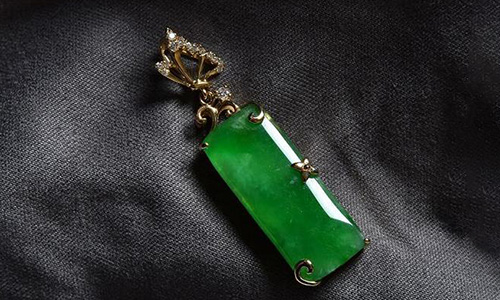
Iron without chromium creates red jade, yellow jade, or white jade. Understanding jade green color origin means understanding this elemental alchemy. A vivid green jade pendant carries millions of years of this chemical storytelling.
The Geological Pressure Cooker
But chromium alone is not enough. For jadeite to develop its legendary transparency and fine-grained texture, it needs incredible pressure and moderate heat sustained for geological ages. The jade mines of northern Myanmar sit in a tectonic boundary zone where the Indian subcontinent crashes into Asia. This collision, still ongoing, creates exactly the conditions jade needs: temperatures between 200 and 400 degrees Celsius, pressures equivalent to 30 kilometers of solid rock above.
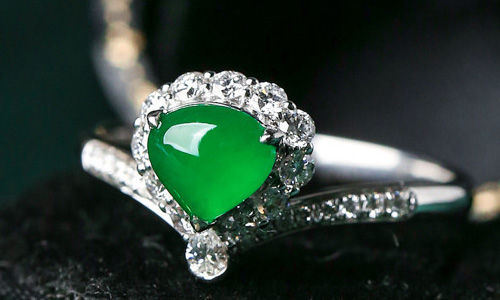
In this crucible, jadeite crystals grow interlocked and almost microscopic, creating that prized smooth texture. Light passes through without scattering — and we perceive the green as luminous and alive, the hallmark of fine jade. A translucent jade ring demonstrates this beautifully, its inner glow a direct result of the geological conditions that formed it.
Why No Two Stones Share the Same Green
No machine mixes jade’s colors. No artist signs these works. Each stone’s green is determined by a unique combination of chromium content, iron traces, crystal size, and structural imperfections — a fingerprint of its birthplace. This is why two imperial green bangles cut from the same rough will still look subtly different. It is why jade collecting never truly ends, and why holding a fine piece feels like holding a secret from the earth itself.
When evaluating jade’s color, view it in natural daylight rather than store lighting. Hold it near a window and rotate it slowly. Watch how the green shifts and breathes — that is nature’s fingerprint, alive and changing. Browse our full jade collection to see this living variation firsthand.
The Unrepeatable Art of Nature
Every shade of green in jade is a love letter written by the earth, sealed over millions of years. The jade green color origin reminds us that true beauty cannot be manufactured — it must be formed. Once the mines yield their last stones, no new jadeite will appear for millions more years. This makes every genuine piece of jade not just jewelry, but a finite fragment of geological art that will never be repeated.
Each time you hold a piece of green jadeite, you are holding the result of an unrepeatable convergence — the exact amount of chromium, the precise temperature and pressure, the specific duration of geological time that produced this particular shade and no other. No laboratory can synthesize this process. No technology can accelerate it. This color origin is, in the truest sense, a miracle of patience — one that took the earth millions of years to complete and offers us only a finite supply to cherish.