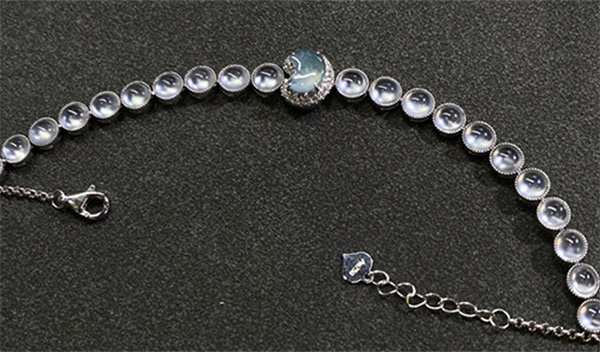
What Modern Jade Design Means for the Contemporary Woman
For centuries, jade was shaped into traditional symbols — buddhas, dragons, lotus blossoms — each carrying deep cultural meaning. But today, a quiet revolution is underway. Modern jade design is redefining how this ancient stone meets the eye of a contemporary woman who values clean lines over ornate carving, restraint over excess, and personal expression over inherited symbolism.
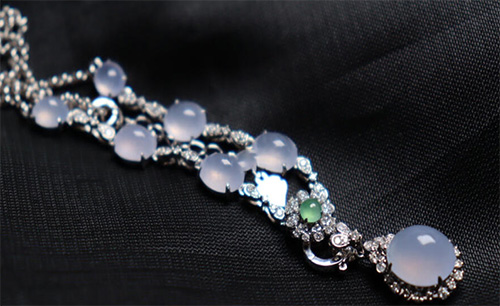
According to Lotus Gemology, a leading authority on jadeite identification, the finest jadeite today is increasingly being cut to showcase the stone’s natural translucency rather than to display traditional motifs — a shift that reflects changing aesthetic values among younger collectors worldwide. The stone itself has not changed. What has changed is how we choose to see it.
How Ancient Craft Meets Contemporary Jade Minimalism
The tension between heritage and innovation is what makes modern jade design so compelling. Master carvers who once spent months on intricate mythological scenes are now applying their skills to something far more difficult: simplicity. A perfectly polished jade disc with no decoration whatsoever requires absolute material perfection, because there is nowhere to hide a flaw.
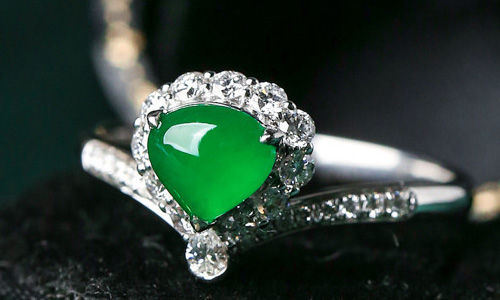
This minimalist approach does not discard tradition — it distills it. The ancient Chinese concept of “less is more” finds its purest expression in a piece of jade that speaks through quality alone, without the scaffolding of decorative narrative. A clean jade pendant with a contemporary setting honors the stone’s natural beauty while speaking directly to modern sensibilities.
Geometric Silhouettes in Contemporary Jade Jewelry
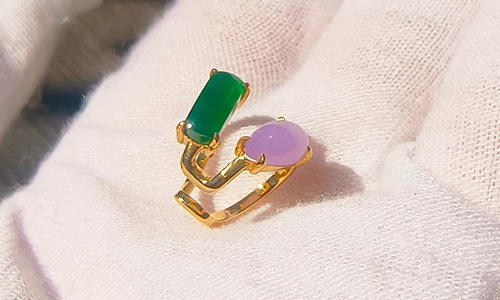
One of the most striking trends in contemporary jade jewelry is the move toward geometric forms. Circles, rectangles, and organic freeform shapes are replacing the traditional carved figures. These bold silhouettes celebrate the material itself — its color gradients, its translucency, its texture — rather than the artisan’s ability to render a familiar symbol.
Geometric jade pieces pair naturally with modern wardrobes. A rectangular jade pendant on a fine gold chain sits beautifully against a crisp white shirt. An asymmetric jade ring becomes a conversation piece at a dinner party. The geometry feels intentional and architectural, qualities that resonate with women who see their jewelry as an extension of their personal design philosophy. A geometrically set jade ring demonstrates this principle — the setting is a frame, not a statement.
Why Less Carving Reveals More Beauty
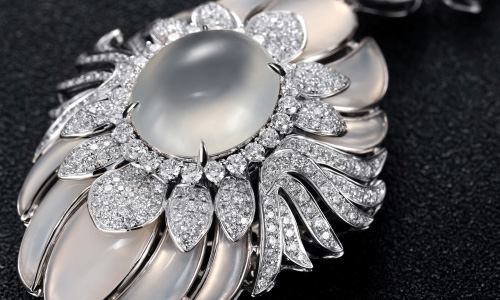
Traditional jade carving served two purposes: artistic expression and concealment. Deep carving could hide color inconsistencies, internal inclusions, or areas of poor translucency. When a modern designer chooses to leave jade largely uncarved, they are making a bold declaration — this material is beautiful enough on its own.
This is why modern jade design demands higher-quality rough material. You cannot simply polish a low-grade stone and call it minimalist. The surface must be flawless, the color must be even, and the translucency must create that characteristic inner glow. Every imperfection becomes visible, which means the bar for material quality rises dramatically when you remove the safety net of decorative carving.
Contemporary Jade for Everyday Wear
The true test of any design philosophy is whether it works in real life. This design philosophy passes this test brilliantly because its core principle — simplicity — is inherently versatile. A clean jade bangle slides effortlessly from morning meetings to evening dinners. A minimal jade pendant works with everything from a T-shirt to a cocktail dress.
Unlike traditional carved jade, which can feel costume-like or overly formal for casual settings, contemporary jade pieces are designed for daily life. They do not demand a special occasion. They create one. Explore our curated jade collection to find pieces that bridge the gap between heritage craftsmanship and modern everyday elegance.
The Future of Contemporary Jade Artistry Is Already Here
What we are witnessing is not the death of tradition but its evolution. The values that made jade precious for thousands of years — purity, resilience, inner luminosity — remain unchanged. What has shifted is the visual language through which those values are expressed. This new design language does not reject the past; it translates the past into a vocabulary that speaks to the present.
For the contemporary woman, this means jade is no longer a relic to inherit but a living art form to choose. It means you can wear a piece of jade that honors millennia of cultural reverence while feeling entirely, unmistakably modern. That is the promise of this new chapter — and it is only just beginning.
Frequently Asked Questions
What defines contemporary jade aesthetics?
Contemporary jade aesthetics refer to modern approaches to jade jewelry that emphasize minimalism, geometric forms, and the natural beauty of uncarved jade over traditional carved motifs like buddhas or dragons.
Is contemporary jade jewelry more expensive than traditional carved jade?
It can be, because minimalist jade requires higher-quality rough material. With no carving to hide imperfections, the stone itself must be flawless in color, translucency, and surface quality.
Can modern jade jewelry be worn daily?
Yes. Contemporary jade pieces are designed for everyday wear. Their clean lines and simple settings make them versatile enough for both casual and formal occasions.