While gold and diamonds dominate mainstream investment conversations, discerning collectors have long recognized that jade jewelry for investment offers unique advantages that few other gemstones can match. Fine jadeite has consistently appreciated in value at auction houses worldwide, with top-quality pieces commanding millions at Sotheby’s and Christie’s. Unlike fashion jewelry that depreciates the moment you leave the store, investment-grade jade combines portable wealth with wearable beauty. However, not every jade piece qualifies as a sound investment. Understanding what separates collector-grade jade from ordinary commercial pieces is essential before making a purchase. Here are five key factors that guide smart jade investors.
The Growing Case for Jade Jewelry for Investment
Jade’s investment credentials rest on several structural advantages. First, the supply of high-quality jadeite is finite—Myanmar’s legendary Hpakan mines, which produce the world’s finest material, have seen declining output for decades. Second, demand continues to grow as collectors in Asia, Europe, and North America develop deeper appreciation for the stone. Experts at Lotus Gemology have documented how premium jadeite prices have risen steadily over the past thirty years, particularly for pieces with exceptional color and translucency. Third, jade is uniquely wearable wealth—a bangle or pendant that you enjoy daily can simultaneously serve as a store of value.
5 Key Factors for Buying Jade Jewelry for Investment
1. Color: The Primary Value Driver
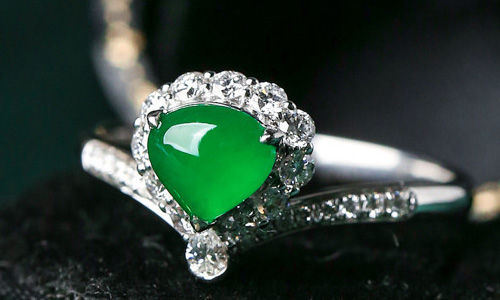
Color is the single most important factor in determining jade’s investment value. The most coveted shade is “imperial green”—a vivid, saturated emerald-green with even distribution throughout the stone. However, exceptional lavender, vivid yellow, and icy white jade also command premium prices. The key qualities to evaluate are hue (the specific shade), saturation (intensity of color), tone (lightness or darkness), and uniformity (how evenly the color distributes). Pieces with strong, even color across all areas are exponentially more valuable than those with patchy or muted coloring.
2. Translucency: The Hallmark of Quality
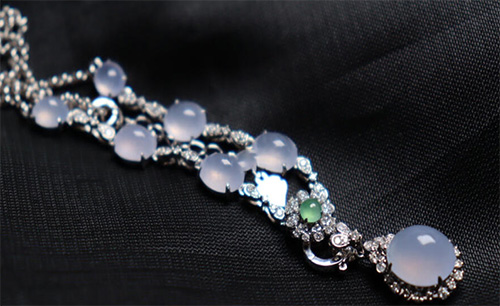
Beyond color, translucency—the degree to which light passes through the stone—is a critical investment indicator. The finest jadeite is semi-transparent to transparent, glowing with an inner light that collectors describe as “watery.” Hold a piece up to a strong light source: the more light that penetrates, the higher the quality. Opaque jade with little light transmission commands significantly lower prices. When evaluating jade jewelry for investment, always prioritize translucency alongside color, as the combination of vivid color and high transparency represents the top tier of value.
3. Treatment: Insisting on Type A Jade
Jade on the market falls into three categories: Type A (natural, untreated), Type B (acid-washed and polymer-impregnated), and Type C (dyed). Only Type A jade qualifies as an investment. Type B and Type C pieces are chemically altered and will deteriorate over time, losing both beauty and value. Always demand certification from a reputable gemological laboratory confirming Type A status. Our pendant collection features only certified Type A jadeite, giving collectors confidence in every purchase.
4. Craftsmanship: Proportions and Finish Matter
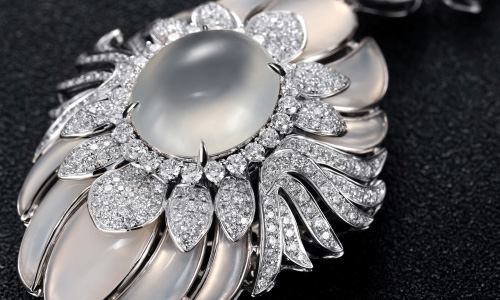
Investment-grade jade requires craftsmanship that honors the material. For bangles, look for a smooth, well-proportioned profile with no visible cracks or inclusions that compromise structural integrity. For carved pieces, evaluate the artistry: clean lines, balanced composition, and thoughtful use of the stone’s natural color patterns. Mass-produced commercial pieces lack the artistry that sustains long-term value. Pieces created by recognized artisans or featuring traditional motifs with exceptional execution carry additional collector premium.
5. Documentation: The Paper Trail
Every serious jade investment should come with proper documentation. A certificate from a recognized laboratory (GIA, Gubelin, Lotus Gemology, or NGTC) confirming natural Type A status is non-negotiable. Beyond authentication, provenance documentation—records of previous owners, exhibition history, or publication in gemological literature—can significantly enhance value over time. Keep all receipts, certificates, and appraisal records organized. Our ring collection includes detailed certification with every piece for buyer assurance.
Building a Jade Investment Portfolio
Smart jade investors diversify across categories: a bangle for daily wear, a pendant for versatility, and perhaps a pair of earrings or a ring for completeness. Start with pieces in the mid-range price tier that demonstrate strong color and good translucency, then gradually upgrade as your knowledge deepens. The jade market rewards patience and education—collectors who invest time in learning to evaluate quality consistently make better purchasing decisions than those who chase trends. Visit our shop to begin building your collection with confidence.
Investing in fine jade is not just about financial returns—it is about acquiring pieces that carry thousands of years of cultural meaning while appreciating in value. The combination of beauty, rarity, and heritage makes jade a uniquely satisfying addition to any investment portfolio.
Frequently Asked Questions
How much should I budget for investment-grade jade?
Entry-level investment pieces start around $500-1,000 for small pendants or earrings with good color and translucency. Serious collectors typically invest $3,000-10,000 for bangles or pendants with premium quality. Museum-grade pieces with exceptional imperial green color can exceed $100,000. Start within your comfort zone and upgrade over time.
Does jade jewelry need special storage for investment purposes?
Store jade pieces individually in soft cloth pouches away from direct sunlight and extreme temperatures. Avoid stacking jade with harder gemstones. Periodic gentle cleaning with lukewarm water and a soft cloth maintains the surface. For valuable pieces, keep them in a humidity-controlled environment and maintain updated insurance appraisals.
Can I wear my investment jade daily?
Absolutely—jade is meant to be worn and enjoyed. Its toughness (resistance to breaking) makes it suitable for daily wear. However, avoid exposing investment pieces to harsh chemicals, extreme impacts, or activities that risk scratching. The belief that jade improves with wear has cultural backing: body oils can enhance the stone’s luster over time, a phenomenon collectors call “growing the jade.”