4 Aspects of Jade Texture Meaning That Determine True Quality
When connoisseurs evaluate jade, the first thing they examine is not color but texture. Jade texture meaning goes far beyond how a stone feels to the touch — it encompasses the internal structure, grain pattern, and crystalline organization that determine how a piece interacts with light, how it ages, and ultimately how beautiful it becomes. According to the Gemological Institute of America (GIA), texture is the single most important quality factor in jadeite, more fundamental than color because even the most vivid green cannot compensate for poor texture.
The Grain: Nature Fingerprint Inside the Stone
Jadeite forms as interlocking microscopic crystals, and the size and arrangement of these crystals create what experts call the grain. Fine-grained jadeite has tightly packed, tiny crystals that produce a smooth, even surface with a luminous glow — this is the texture that commands the highest prices. Coarse-grained jadeite has larger, more visible crystal structures that can appear slightly cloudy or fibrous. Understanding this concept begins with recognizing that fine grain is what allows light to penetrate deeply and return as that signature glow-from-within radiance. Our jade gourd pendant showcases the kind of fine, even texture that connoisseurs prize.
How Texture Creates the Living Glow
That legendary jade glow — the soft, warm radiance that seems to come from inside the stone rather than from surface reflection — is entirely a product of texture. When light enters fine-grained jadeite, the tightly packed crystals scatter it evenly in all directions, creating a diffuse, even luminosity. In coarser jadeite, light scatters unevenly, producing a duller appearance.
This is why experts consistently advise that texture is the foundation upon which all other qualities rest — color, translucency, and craftsmanship all depend on a fine-textured base to achieve their full effect. This is why two pieces of identical color can look dramatically different: the one with superior texture will appear alive and glowing, while the other looks flat. Jade texture meaning, in practical terms, is the difference between a stone that merely exists and one that truly lives.
Texture Determines How Jade Ages
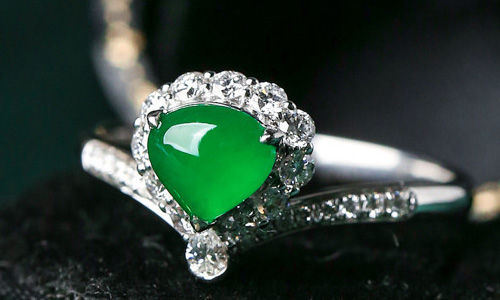
One of the most compelling aspects of texture is how texture affects aging. Fine-textured jadeite develops a richer, more luminous patina over years of wear, absorbing the natural oils from skin and deepening its glow. Coarse-textured jadeite is more prone to surface degradation and does not improve with age in the same way. This is why texture is the foundation of heirloom quality — a piece with fine texture will be more beautiful in twenty years than it is today, while a piece with poor texture will look the same or worse. A well-textured jade ring rewards a lifetime of wear, growing more personally beautiful with each year. Our icy jade ring exemplifies this fine texture beautifully.
Learn to See Texture Before Color
Train your eye to evaluate jade texture meaning before getting distracted by color. Hold the piece under natural light and look past the hue to how light moves within the stone. Is the glow even and deep? Does the surface appear smooth and alive, or slightly cloudy and inert? The answer tells you more about quality than any color ever could. Browse our curated jade collection and practice seeing texture first — it will transform the way you appreciate jade forever.