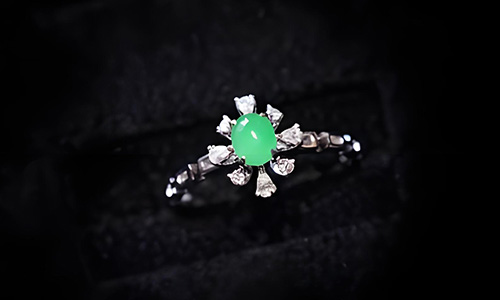
Have you ever picked up a piece of green jewelry and wondered whether it is real jade or just dyed chalcedony? You are not alone. Green chalcedony is one of the most common jade simulants on the market, and dishonest sellers often pass it off as genuine jadeite. Understanding the jade vs chalcedony difference protects your budget and helps you build a collection you can trust. In this guide, we walk you through five practical tests you can use at home or in a showroom.
Jade vs Chalcedony Difference: 5 Key Tests
Jadeite and chalcedony may look similar at first glance, but they differ in almost every physical property. Gemologists rely on a handful of simple checks, and the five below are the most useful for everyday buyers.
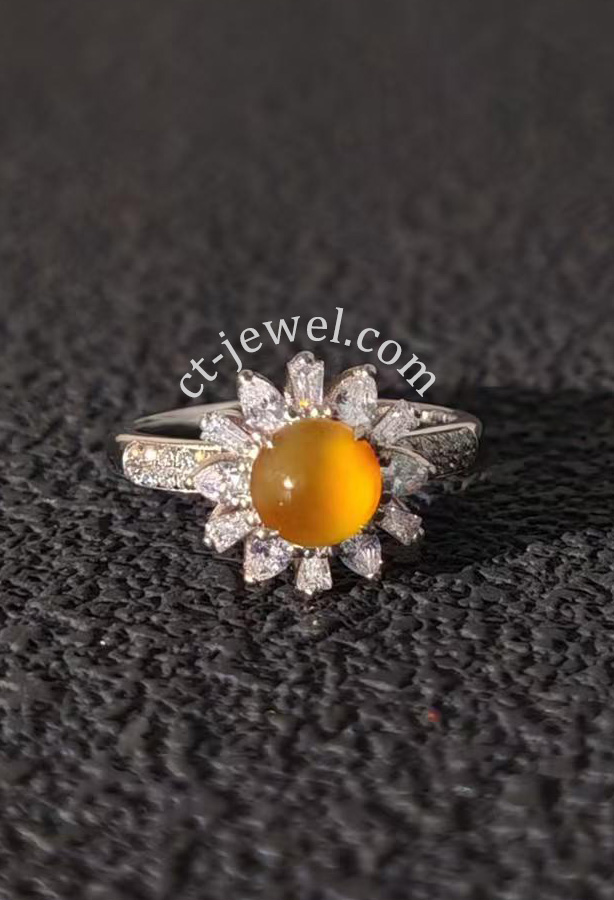
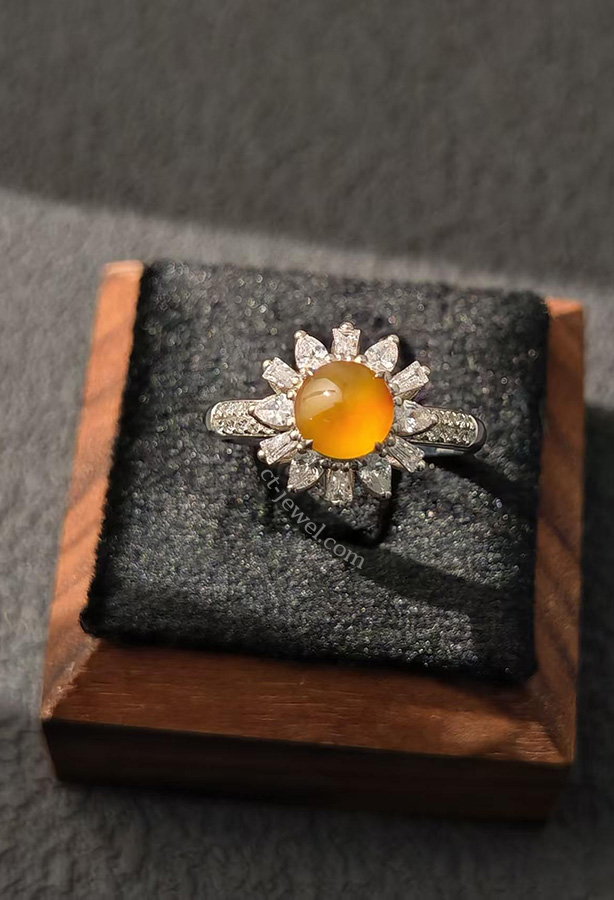
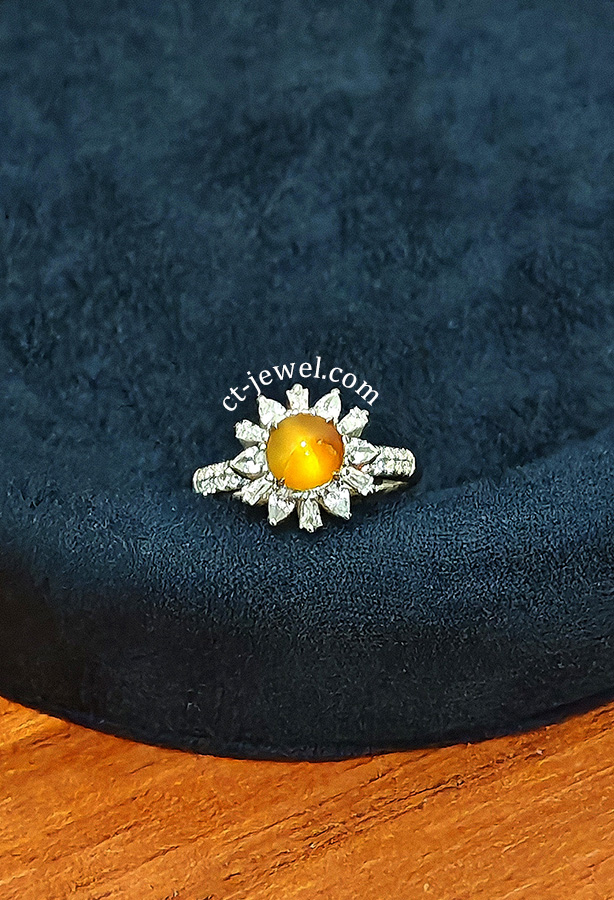
Golden Jade Sunflower Ring
1. Density and Weight
Jadeite has a specific gravity of 3.30 to 3.38, while chalcedony sits at just 2.58 to 2.64. In practice, this means a genuine jadeite bangle or cabochon feels surprisingly dense and substantial in your palm, whereas a same-sized piece of chalcedony feels noticeably lighter. This “heft test” requires no equipment at all. Hold the stone in your hand, toss it gently, and pay attention to how solid it feels. Experienced collectors can often spot a simulant within seconds using weight alone.
2. Color Distribution
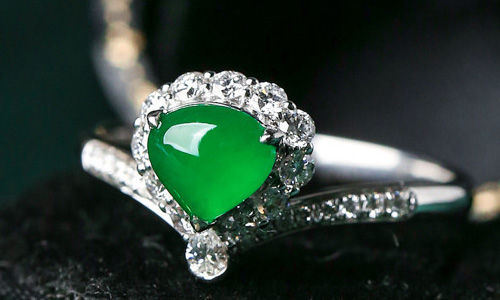
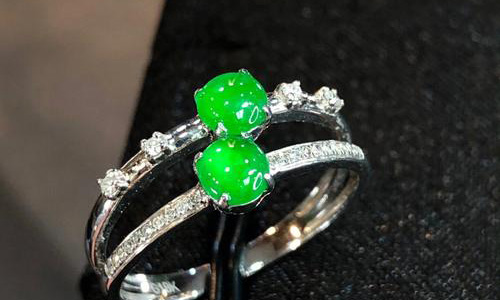
Natural jadeite shows gentle color zoning: lighter and darker areas blend into each other, and the color appears to glow from within the stone. Dyed chalcedony tells a different story. The pigment collects in surface cracks and fissures, so under a magnifier you will see dark lines of concentrated dye and an unnaturally even green elsewhere. If you want a reference for what natural color zoning looks like, browse the pieces in our jade ring collection and study how the green shades flow across each stone.
3. Internal Structure
Jadeite is built from interlocking fibrous or granular crystals, a felted texture that gives the gem its legendary toughness. Chalcedony is a microcrystalline form of quartz with a far more uniform, fine-grained structure. Under a standard 10x jeweler’s loupe, jadeite reveals a slightly mottled, interlocked grain, while chalcedony looks smooth and almost featureless. This structural gap is also why jadeite takes a softer, warmer polish compared with the glassier surface of quartz.
4. Hardness and Toughness
On the Mohs scale, both stones sit around 6.5 to 7, so scratch tests alone will not separate them. The real distinction is toughness: jadeite resists chipping and breaking far better than chalcedony thanks to its interlocked crystals. Pieces meant for daily wear, like the designs in our jade pendant collection, take advantage of this durability. Chalcedony, by contrast, can chip along its fibrous planes when knocked against a hard surface.
5. Price and Value
Finally, consider the price tag. Fine jadeite, especially imperial green material, can sell for thousands of dollars per carat, while dyed chalcedony costs only a few dollars per piece at wholesale. When a seller offers “imperial jade” at a suspiciously low price, you are almost certainly looking at treated quartz. The jade vs chalcedony difference in value is one of the strongest warning signs you can use, because honest pricing rarely lies about what a stone really is.
How to Shop for Real Jade with Confidence
Beyond the five tests, a few buying habits will keep you safe. Always purchase from sellers who disclose treatments in writing, and ask whether a stone has been dyed, bleached, or polymer-impregnated. For significant purchases, request a laboratory report. Independent labs such as the GIA can confirm whether a gem is natural jadeite, treated jadeite, or an imitator like chalcedony, and their reports carry weight worldwide.
It also helps to handle as much jade as you can. Visit reputable shops, compare weights and lusters side by side, and train your eye on certified pieces. Within a short time, the look and feel of genuine jadeite becomes second nature, and imitations start to stand out immediately.
Frequently Asked Questions
Can chalcedony be dyed to look like jade?
Yes, and it happens constantly. Green dye is applied to pale chalcedony to imitate imperial jadeite. The giveaway is dye concentrated in fractures, which you can spot with a loupe or even a phone camera zoom.
Is chalcedony considered real jade?
No. Only jadeite and nephrite qualify as true jade. Chalcedony is a quartz variety that merely resembles jade, and reputable sellers must label it accurately.
What is the easiest test for beginners?
The heft test is the simplest starting point, since jadeite is dramatically denser. Combine it with a close look at color distribution, and you can filter out most dyed chalcedony before spending a cent.
Now that you understand the jade vs chalcedony difference, you can shop with real confidence. Explore our full selection of certified jadeite pieces in the CT Jewel Shop, and find a stone that is honestly worth your investment.