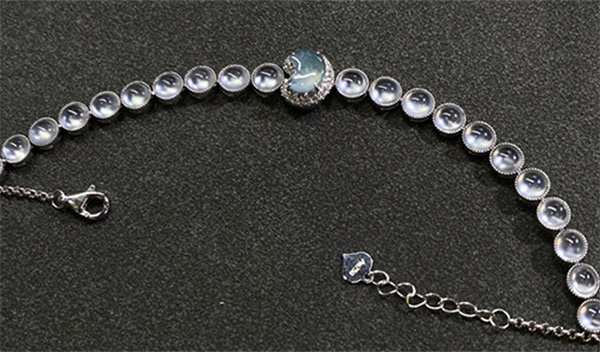
Glass is the oldest and most common jade imitation in the market, and knowing the jade vs glass imitation difference is the first line of defense for any jade buyer. Modern glass fakes have become increasingly sophisticated — some even include artificial “color zoning” — but they still fail a handful of simple tests. Here are 6 foolproof ways to separate genuine jadeite from glass imitations.
Jade Vs Glass Imitation Difference: Why Glass Fakes Keep Tricking Buyers
Glass imitations have been used to mimic jade for centuries because glass is cheap, easy to color, and simple to mold into any shape. Modern techniques can produce glass that looks remarkably like jadeite at first glance — bright green, smooth, and shiny. However, glass and jadeite are fundamentally different materials: glass is an amorphous solid with no crystal structure, while jadeite has an interlocking crystalline structure that gives it unique physical properties. The GIA notes that glass remains the most frequently encountered jade simulant in laboratory testing.
6 Foolproof Tests to Identify Real Jadeite
1. Check for Air Bubbles — The Dead Giveaway
Under a 10× loupe or jeweler’s magnifier, glass imitations almost always contain tiny spherical air bubbles trapped during the manufacturing process. These bubbles appear as perfect circles, often in clusters. Genuine jadeite never contains air bubbles — its natural crystal growth leaves no room for trapped gas. If you see bubbles, you are holding glass, period.
2. The Temperature Test — Feel the Cool
Jadeite has high thermal conductivity, which means it feels distinctly cool to the touch even in a warm room. Glass, being a poor thermal conductor, warms up quickly to skin temperature. Touch the piece to your cheek or lip — if it feels cold and stays cold for several seconds, it could be jadeite. If it warms almost immediately, the this key distinction is working against you. Browse our jade ring collection for pieces that pass the cool test every time.
3. The Weight Test — Density Does Not Lie
Jadeite has a specific gravity of 3.30–3.38, while most glass ranges from 2.40–2.80. A jadeite piece of a given size will feel noticeably heavier than a glass piece of identical dimensions. Hold one in each hand and the heft difference is immediate and obvious.
4. The Sound Test — Ring True or Thud False
When tapped gently with a metal object, genuine jadeite produces a clear, resonant, bell-like tone. Glass produces a dull, flat thud. This acoustic test has been used by jade dealers in China for centuries. Explore our jade pendant selection for pieces with that characteristic jade resonance.
5. Examine the Surface — Mold Marks Tell All
Glass imitations are often cast in molds, leaving behind subtle seam lines, slightly rounded edges, or surface flow lines visible under magnification. Jadeite is carved and polished by hand or machine from rough stone, producing organic, natural surface characteristics. If the surface looks too uniform or you spot mold seams, it is glass.
6. The Fracture Test — Shell vs Splinter
When chipped, glass fractures in a conchoidal pattern — smooth, shell-like curves with razor-sharp edges. Jadeite fractures in a splintery, fibrous pattern due to its interlocking crystal structure. You should never intentionally break a piece to test it, but examining any existing chips under magnification reveals this telltale contrast clearly.
What to Do When You Are Still Not Sure
If the at-home tests for the jade vs glass imitation difference leave you uncertain, the safest path is a professional gemological certificate. A certified lab will test refractive index, specific gravity, and spectroscopic absorption — three properties where glass and jadeite differ dramatically. The cost of a certificate is always less than the cost of buying a fake.
Frequently Asked Questions
Can glass imitation jade fool a professional?
No. Any trained gemologist with standard equipment can distinguish glass from jadeite in seconds. The refractive index, specific gravity, and internal structure are completely different.
How common is glass imitation jade?
Very common, especially in tourist markets, street stalls, and unverified online sellers. If the price seems too low for “jade,” it is almost certainly glass or another simulant.
Is glass imitation jade worth buying?
Only as costume jewelry. Glass has no gemological value and will not hold or increase in price over time. If you want lasting value, always choose genuine jadeite.
Now that you can spot the jade vs glass imitation difference, shop with confidence. Browse certified jadeite at the CT Jewel Shop and never second-guess your purchase again.