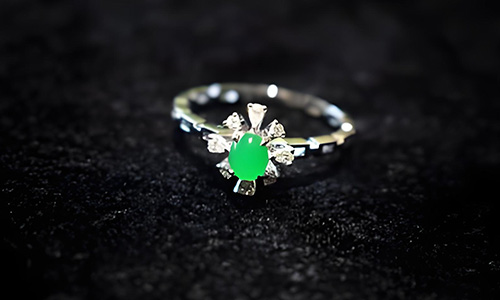
Shopping for green jade and not sure what you are really looking at? The jade vs tianshan cui difference confuses even experienced buyers, because these two green stones can look almost identical at first glance. One is precious jadeite worth thousands of dollars; the other is an affordable quartzite. Here are 6 reliable ways to tell them apart before you spend your money.
Jade vs Tianshan Cui Difference: Why It Matters
Jadeite is a sodium aluminum silicate from the pyroxene family, treasured for centuries as the king of jade. Tianshan Cui, also marketed as Tianshan jade or Xinjiang jade, is a quartzite jade made of cryptocrystalline quartz. It is mined in the Xinjiang region of China and has become popular as a budget-friendly lookalike.
Because its milky white base with green veining closely resembles ice-floating jadeite, some sellers quietly pass Tianshan Cui off as the real thing. The price gap between the two can be tenfold or more, so a wrong guess is expensive. Learning how these two stones differ protects your wallet and helps you buy with confidence, whether you shop online or in person.
6 Ways to Tell Jadeite from Tianshan Cui
1. Check the Density and Weight
Jadeite has a density of 3.30 to 3.38 g/cm3, while Tianshan Cui sits around 2.65 g/cm3. A genuine jadeite ring or bangle feels noticeably heavier in your palm than a same-sized Tianshan Cui piece. This weight gap is one of the quickest at-home tests you can do.
2. Examine the Color Pattern
Jadeite’s green grows in natural, layered zones with soft transitions. Tianshan Cui shows green patches that sit on the surface of a white base, almost like paint strokes. If the green looks flat and printed on, you are likely holding quartzite.
3. Compare the Luster
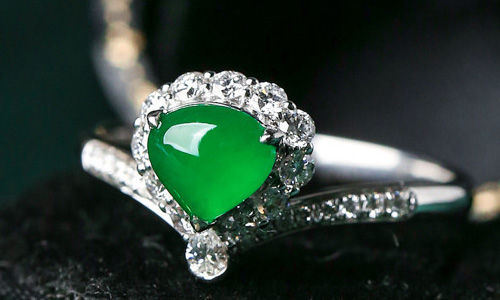
Polished jadeite shows a warm, greasy-to-vitreous glow that seems to come from inside the stone. Tianshan Cui has a harder, glassier shine. You can see this soft inner glow clearly in our jade ring collection, where every piece is certified natural jadeite.
4. Inspect the Inner Structure
Under a jeweler’s loupe, jadeite reveals a fine interlocking fibrous texture. Tianshan Cui, being quartzite, shows a granular, sugar-like structure. This also explains why jadeite is far tougher and less likely to chip in daily wear.
5. Test the Sound
Tap a jadeite bangle gently with a coin and it rings with a clear, musical tone. Tianshan Cui gives a duller, shorter click. Collectors often use this sound test alongside weight when checking jade pendants and bangles.
6. Compare the Price
Fine green jadeite commands premium prices, often hundreds to thousands of dollars per piece. Tianshan Cui usually sells for a small fraction of that. If a so-called jadeite deal looks too cheap to be true, it is probably Tianshan Cui.
Which One Should You Buy?
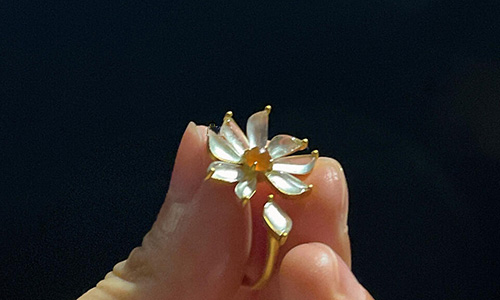
Neither stone is bad; they simply serve different buyers. Tianshan Cui is a lovely, affordable gemstone for casual wear, as long as you pay quartzite prices for it. Trouble only starts when it is sold as jadeite. Once you understand the jade vs tianshan cui difference, you will see that certified natural jadeite is the right choice for lasting value and heirloom quality. If you are building a collection to pass down, jadeite is the stone that holds its worth over time.
Frequently Asked Questions
Is Tianshan Cui real jade?
No. In gemology, only jadeite and nephrite count as true jade. Tianshan Cui is a quartzite jade, which means its main mineral is cryptocrystalline quartz, not jadeite.
Can Tianshan Cui be certified as jadeite?
No. A reputable gem laboratory will identify it as quartzite. Always ask for a certificate from a trusted lab such as GIA when buying higher-priced green jade jewelry.
Does Tianshan Cui have any value?
Yes, it is a legitimate and attractive gemstone in its own right, just not true jade. It is worth buying when priced honestly as an affordable alternative.
Now that you know the jade vs tianshan cui difference, you can shop smarter and avoid overpaying. Browse our Shop for certified natural jadeite rings and pendants, each hand-picked for lasting quality. For independent gemological information, visit GIA.